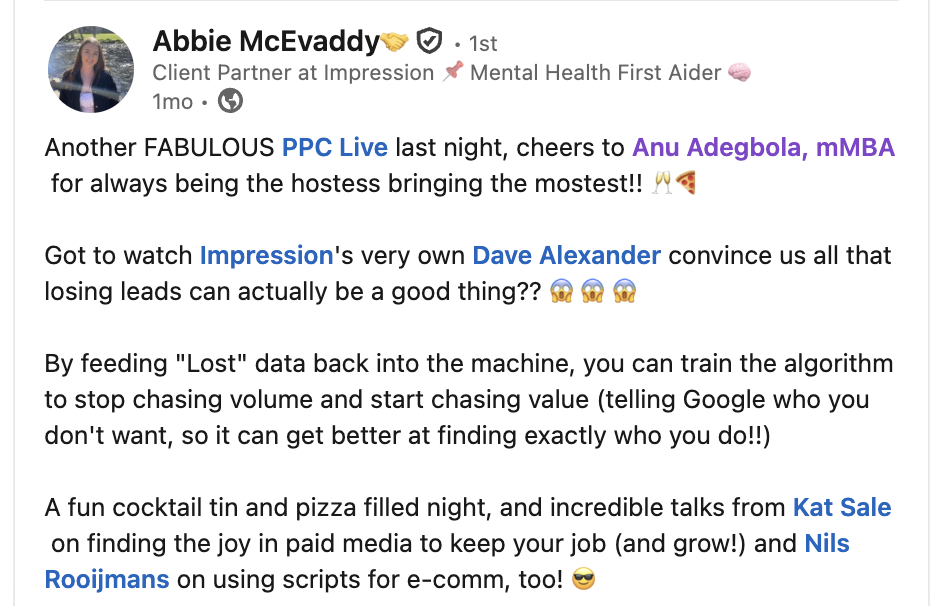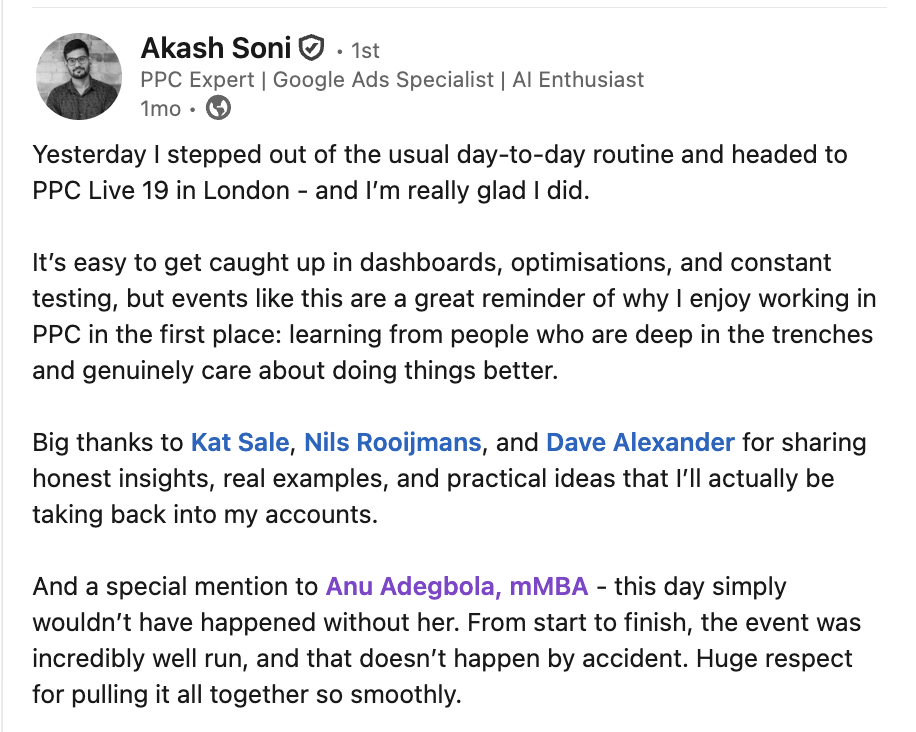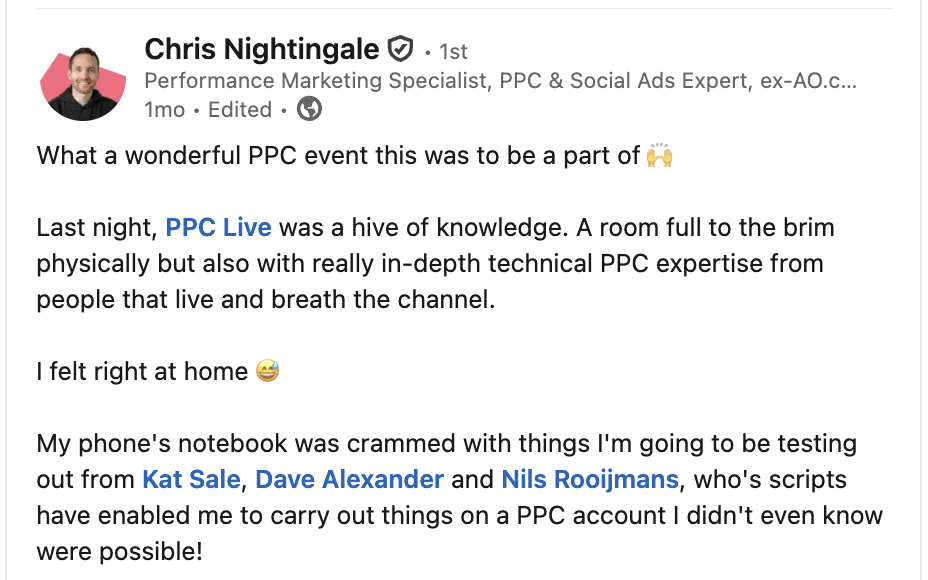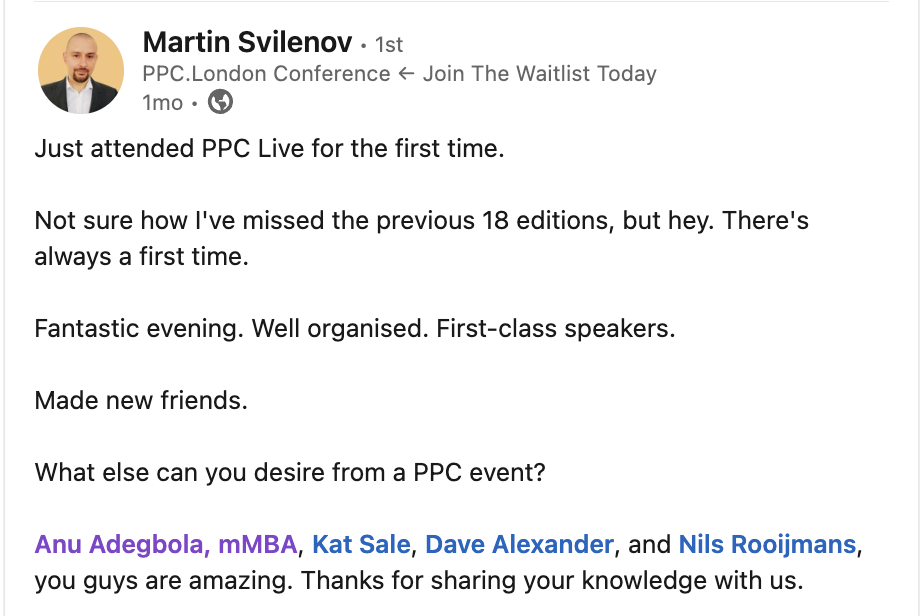
PPC Live 19 was one of our most successful events yet — and for those who couldn’t join us in person, PPC Live 19 Online brought the best insights straight to your screen.
As always, PPC Live is built around one simple idea: No sales pitches. No agency chest-beating. Just thoughtful, real-world case studies from practitioners who live and breathe paid media.
This edition featured three brilliant talks from:
- Kat Sale
- Dave Alexander
- Nils Rooijmans
From career fulfilment to lost-lead analysis to ecommerce automation with scripts — this session was packed with practical takeaways for modern PPC marketers navigating 2026.
Finding Joy in PPC – Kat Sale
Kat opened the session with something refreshingly different: not tactics, not platform updates — but mindset.
After 16 years in PPC, she asked a deceptively simple question:
Why do we actually work?
Yes, money matters. But beyond that?
- Purpose
- Community
- Growth
- Recognition
- Creativity
Kat shared how staying curious — what she calls being a “geeky magpie” — has kept her energised through constant platform change. From early Google Glass experiments to YouTube skippable ads to advertising on ChatGPT, her joy comes from testing what’s new.
The Explorer Bee Framework
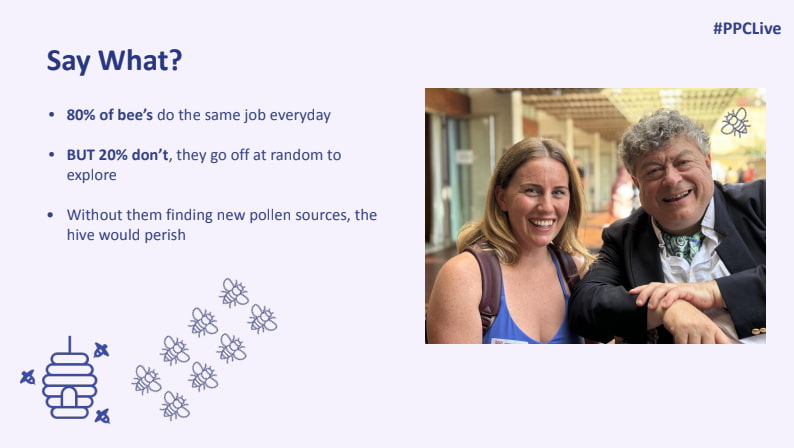
One of the standout moments was the “Explorer Bee” analogy (inspired by Rory Sutherland’s thinking).
In a beehive:
- 80% of bees maintain the system.
- 20% explore for new pollen and threats.
Without explorer bees, the hive stagnates.
Kat’s challenge to the audience:
Are you making time to explore?
In PPC terms, that means:
- Testing unconventional segmentation
- Running geo experiments
- Trying new ad formats
- Challenging “how we’ve always done it”
She shared a practical example with Universal Music, where performance was improved simply by analysing US state-level performance and cutting underperforming regions. A classic example of curiosity leading to measurable impact.
The Joy Audit
Kat closed with a self-assessment quiz covering:
- Do I like my colleagues?
- Do I have freedom to test?
- Can I be honest with my boss?
- Do I feel the “Sunday Scaries”?
- Can I genuinely be myself at work?
The takeaway wasn’t fluffy motivation. It was accountability.
If you’re not enjoying PPC, something needs adjusting — whether that’s mindset, leadership, or environment.
Lost Leads Are Not Lost Revenue – Dave Alexander
Next up, Dave tackled a problem many B2B advertisers quietly struggle with: smart bidding without enough smart data.
Google recommends 30 conversions in 30 days. For B2B? That’s often unrealistic.
So what’s the solution?
The Funnel Gap
In many accounts, Google sees this:
Ad Click → Website Conversion → Black Box
Everything happening in the CRM — qualification, opportunity, revenue — is invisible to the bidding algorithm.
That’s a huge problem.
The Power of Lost Leads
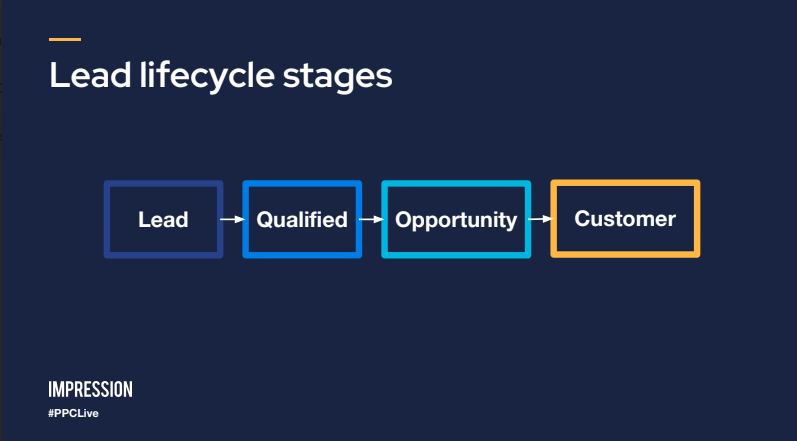
Dave broke the funnel into:
- Lead
- Qualified
- Opportunity
- Customer
Then he introduced a critical insight:
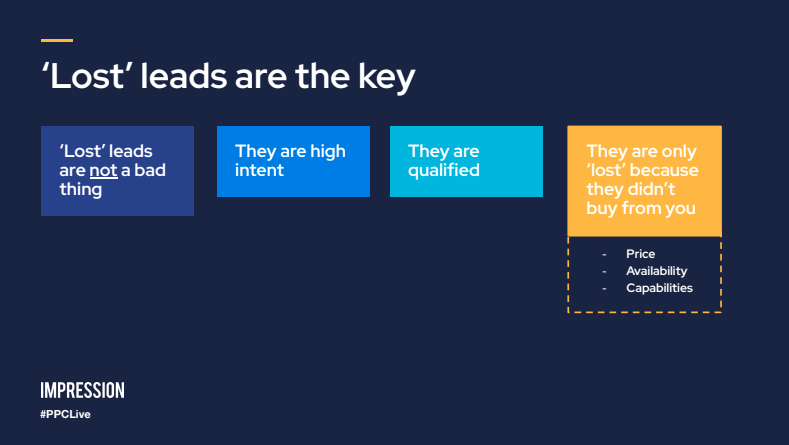
“Lost leads” are still high-intent users.
They were qualified. They just didn’t convert because of:
- Price
- Capacity
- Timing
- Competitor wins
By importing opportunity and opportunity-lost data back into Google Ads via CRM integration or offline conversion imports, advertisers can:
- Increase conversion signals
- Improve Smart Bidding learning
- Strengthen volume for optimisation
In one example, adding lost opportunity data increased usable conversion signals by 25%.
That’s the difference between struggling for data and feeding the algorithm properly.
Practical Implementation
Dave also covered:
- Assigning lower values to “lost” conversions to prevent over-optimisation
- Using dynamic conversion values for real opportunities
- Consolidating campaigns to increase data density
- Reverse-engineering budgets based on conversion rate math
The core message?
Smart bidding is only as smart as the data you give it.
Scaling Ecommerce with Scripts – Nils Rooijmans
The final (and most technical) session came from automation specialist Nils Rooijmans.
His focus:
How to outperform Performance Max using profit-based tracking and structured automation.
Step 1: Profit-Based Conversion Tracking
Revenue ≠ Profit.
In ecommerce accounts with mixed margins (e.g. high-end cameras vs low-margin accessories), optimising to revenue skews performance.
Nils’ solution:
- Use Google Tag Manager to calculate real profit per order
- Subtract tax, shipping, and cost of goods sold
- Send profit as a secondary conversion
- Migrate bidding gradually to profit-based optimisation
He also addressed returns — a critical blind spot in fashion and high-return verticals — by adjusting conversion values based on item group IDs and return likelihood.
Step 2: Feed Optimisation
Key points:
- Use supplemental feeds
- Automatically detect missing attributes
- Enhance feeds using scripts + LLMs
- Leverage the “product type” attribute to transfer learning between similar items
The product type field, often underused, helps Smart Bidding generalise performance across similar SKUs.
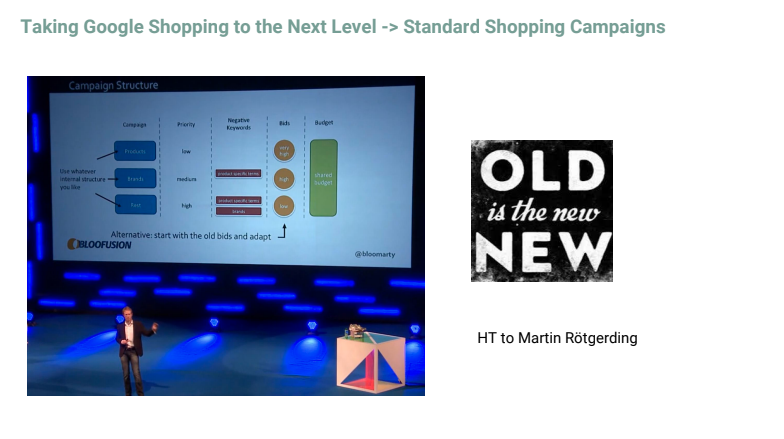
Step 3: Standard Shopping > Performance Max (Often)
Nils made a bold but data-backed argument:
Performance Max often hides inefficient display and discovery spend behind strong Shopping performance.
His preferred structure:
- Standard Shopping (with campaign priorities)
- DSA for coverage
- Search for high-converting terms
- Dynamic remarketing
- YouTube for expansion
- Performance Max only after everything else is maximised
This approach increases:
- Predictability
- Scalability
- Control
Key Themes from PPC Live 19
Across all three talks, a few consistent themes emerged:
Exploration Drives Growth – Whether career development or account performance — curiosity wins.
Data Quality > Data Volume – Smart bidding fails without proper CRM integration and value signals.
Profit > Revenue – Especially in ecommerce, profit-based optimisation is no longer optional.
Control Still Matters – Automation is powerful — but only when structured properly.
Reviews