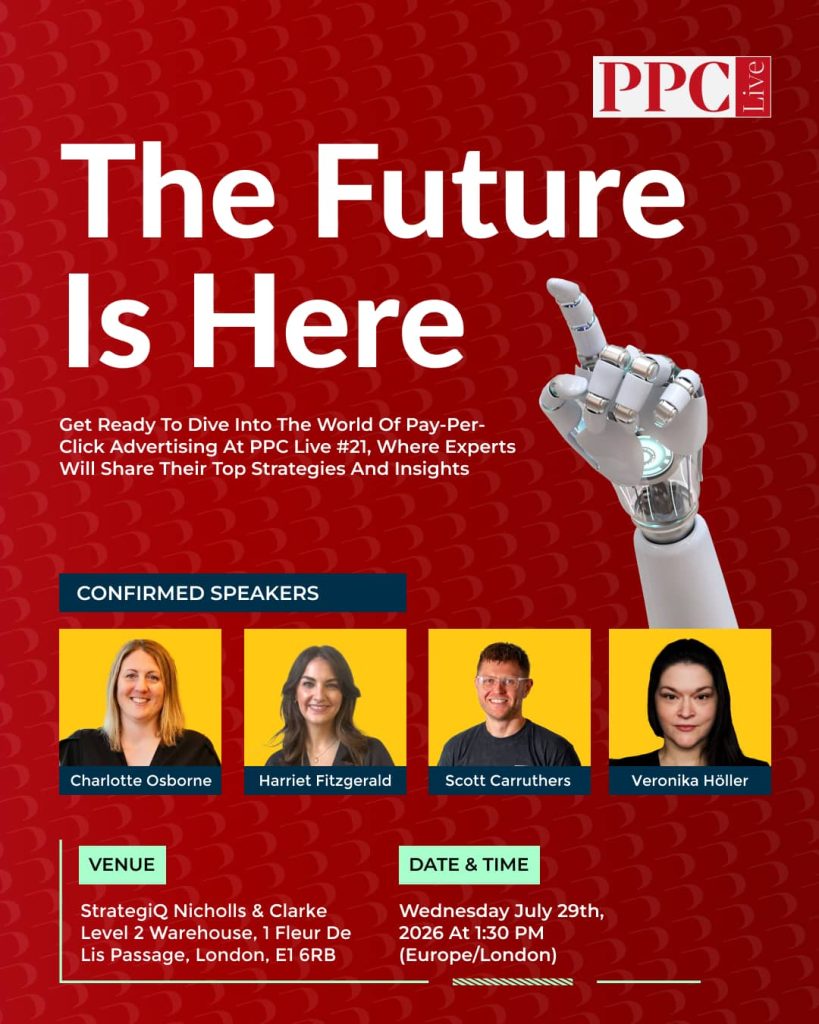
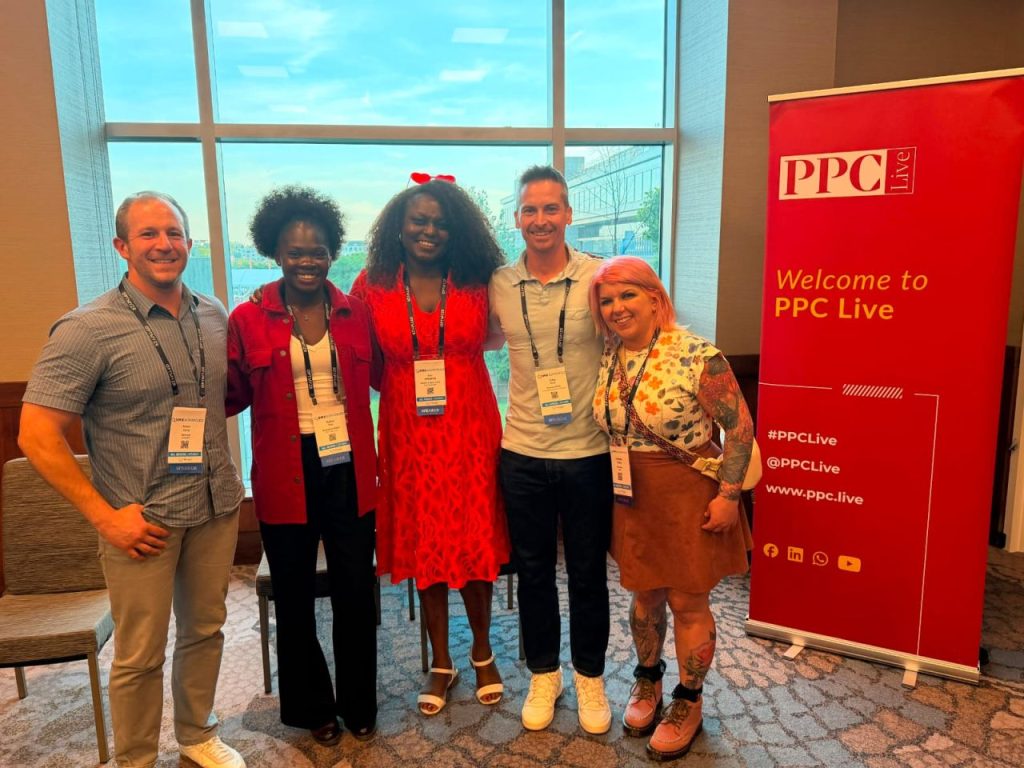
At the recent SMX Advanced 2026 conference in Boston, industry experts gathered for a dynamic PPC Live panel discussion to tackle the complexities of paid search automation. Hosted by Anu, the founder of PPC Live, the session featured a lineup of digital marketing veterans including Susan Yen, Greg Finn, Aaron Levy, and Amanda Farley. The panel dove deep into the challenges and opportunities of adapting to evolving platforms like Performance Max (PMax) and AI Max.
Navigating Performance Max (PMax) for small businesses
We kicked off with a query on how PMax can work for small businesses. PMax was designed as a “one-stop shop” for small and medium-sized businesses, but the platform often struggles to balance its simplicity with the high volume of quality data it requires to function. A major issue faced by advertisers using PMax is the influx of invalid traffic and spam leads.
Farley highlighted the severity of this problem when surveying the room, asking, “has anybody of any sites not had issues with invalid payments issues,” before affirming, “I feel like that is a global issue yeah all sizes yeah i think that’s a huge problem”.
Finn pointed out the foundational issues with the platform’s initial rollout, noting, “I think like one thing with PMAX is it was launching this like all one sizefits all thing and I think it’s like fundamentally flawed in that standpoint”.
To combat low-quality traffic, the panel recommended adding friction to conversion actions—such as requiring a hard credit pull instead of a soft one—to ensure that only highly qualified individuals trigger the conversion pixel.
Strategies for long sales cycles and lead generation
We then talked about industries with long sales cycles. For B2B campaigns or industries with long sales cycles, waiting months for a single conversion signal leaves Google’s algorithms without the data needed to optimize effectively. To resolve this, advertisers should use proxy values for softer, earlier funnel metrics like Marketing Qualified Leads (MQLs) to initially feed the system data, eventually shifting focus once enough bottom-of-funnel sales are recorded.
Ultimately, setting this up requires seamless communication between marketing and sales.
As Farley advised, it is crucial to have “an honest conversation with the the client about… what is qualified lead and what isn’t,” warning that without this internal business alignment, “we can’t fund this strategy that’s just the reality of it”.
Managing compliance in regulated industries
There were several folks in the room who work in compliance heavy industries. Highly regulated industries like finance, pharmaceuticals, and legal services face strict liabilities when using generative AI, which actively seeks new audiences by circumventing set parameters.
Aaron Levy shared a cautionary tale of AI ad generation forcefully inserting pricing into ad copy despite explicit negative prompts, explaining that a Google representative told him, “Yeah the system is designed to find a way to do what it wants to do”.
Because Google’s updated terms place the liability of automated compliance issues directly onto the brand, Levy recommended that regulated advertisers immediately turn off text customization and final URL expansion to maintain legal control over their campaigns.
The transition from DSA to AI Max
With Dynamic Search Ads (DSA) facing deprecation, the topic of advertisers needing to prepare to transition to AI Max came up. The panel warned against treating this as a one-to-one rebuild; instead, it requires adapting to a new system based on thematic targeting.
Susan Yen summarized this required shift in perspective, stating, “changing your mindset when it comes to AI match because I kind of have this belief that match types and keywords are uh going away a little bit and it’s more of a signal first error”. AI Max tends to excel in broad environments where “close enough is good,” such as large e-commerce marketplaces or heavy equipment rentals.
Defending branded search and rising CPCs
Finally the topic of branded search and rising CPCs came up. As automation forces non-brand competitor campaigns to bid more aggressively across the board, the panel noted that Cost Per Clicks (CPCs) are poised to rise. Greg Finn suggested that Google’s push for increased data and automation isn’t entirely benevolent, joking, “I’d go against Aaron i’d say it is nefarious depending on how you define nefarious… they are 100% trying to get more money out of us”.
To protect a company’s branded search terms from this inflation, Aaron Levy strongly recommended utilizing a “mostly manual” CPC strategy. He warned that utilizing automated strategies on branded terms is dangerous: “Because all these automated ad formats are creating extra competitors on your terms… if you have an automated especially target impression share… your brand CPCs are going to double”.
Conclusion: Embracing automation with guardrails
The overarching theme of the PPC Live panel is that while Google’s automated platforms like Performance Max and AI Max offer significant scale, they cannot be left entirely on autopilot.
Advertisers must proactively build strong guardrails to guide the machine learning, whether by adding friction to conversion actions to stop spam leads, setting up proxy conversion values to map out long B2B sales cycles, or explicitly turning off generative text and URL expansion features to ensure legal compliance.
As the industry transitions away from exact keyword matching and deprecated DSA campaigns toward broader, signal-first thematic targeting, success will depend heavily on feeding the algorithms the highest quality data.
Ultimately, navigating the new era of paid search requires a strategic balance between leaning into AI’s massive reach and maintaining strict, manual control over critical assets like branded search campaigns to protect your bottom line.